
The town of Uscio
Territory
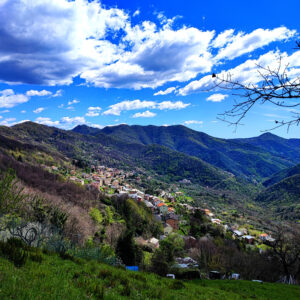
Uscio is a small country of the “Gulf Paradise” Uscio is a small country of the “Golf Paradise”, just a few km away from Recco and Camogli. From there you can take the ferries to Punta Chiappa and San Fruttuoso.. It is a small medieval village with a population of 2000 people situated on the hills of Val di Recco at 350 meters above the sea level. Uscio is located along the ancient commercial route “Via del Sale-Via del Mare”that connected the coastal towns of Liguria with those in Lombardy, and all the way to Piedmont in France This route was used to transport goods and products, mainly salt and oil, from the coastal towns to the hinterland, hence the name Via del Sale. The passage routes through Colle Caprile, Gattorna and Neirone were key routes in connecting the towns of Riviera and the hinterland.
The nature
If you stay silent while admiring the nature and the green of the marvelous woods, you might still be able to hear the sound of horses’ hooves and the steps of the ancient merchants and travelers, who would cross the ancient tracks in the company of the good spirits and fairies, that used to inhabit the woods of Val Fontanabuona Valfontanabuona. Uscio has much to offer not only for those who are passionate about trekking and mountain biking and enjoy walking the ancient paths and the mule tracks of the “Via del Sale-Via del Mare”
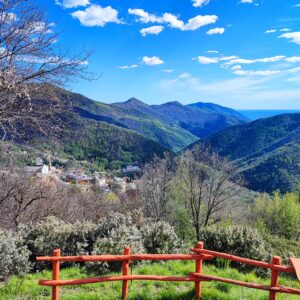
but also for those who wish to enjoy a nice day surrounded by nature, along easier tracks suitable for families, while walking on the surrounding hills, admiring the beauty of nature and the wonderful view over the Gulf Paradise. In the typical local shops of the area, you can buy wine and typical products of Ligurian cuisine. While in the various restaurants, you can taste the “trofie matte” or “batolli” dressed with pesto, typical of Uscio.
For history and art lovers
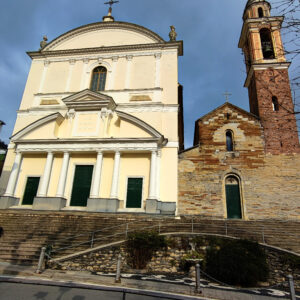
On the main square of the town you can find the “Pieve di Sant’Ambrogio” in Romanesque style, dating back to the 7th century, considered for its antiquity an “Italian National Monument“. Despite the various restorations among the years, the current building has retained its original appearance. The basilicas type-floor-plan has three naves divided by columns with plinth and above the nave in the right, is the old bell tower. Inside the church you can admire the wooden statue of Luca Cambiaso from the 15th century. At its side we find Saint’Ambrogio Church.
.
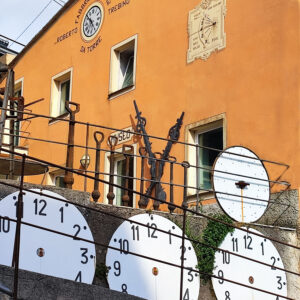
The Clock Tower Museum is located in the center of the town. It was built in 2004 in the old establishment of the Trebbino family, where towers and bell clocks are still produced to this day. The Museum houses 30 specimen that tell the story of these clocks, from the first manual wooden productions dating back to 1800, to the most modern and technological of our times. Entrance to the museum is free, but reservation must be made with the office at the number:+390185919410
Uscio trails
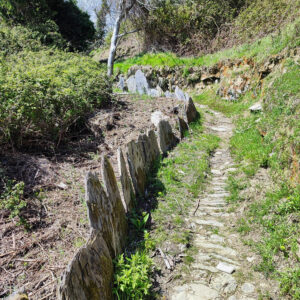
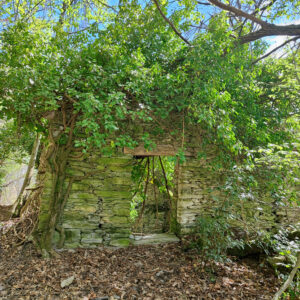
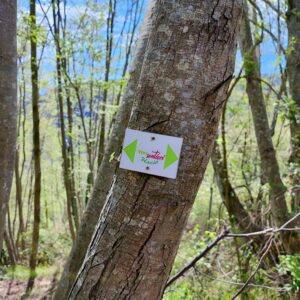
By walking through the chestnut woods and following the ancient paths, stairways and steps you can admire the old ruins and experience fragments of history and a special tradition linked to the use of the black stone– slate, a fundamental heritage of Liguria, discovered and exploited since ancient times.
Trails suitable for family -friendly trekking
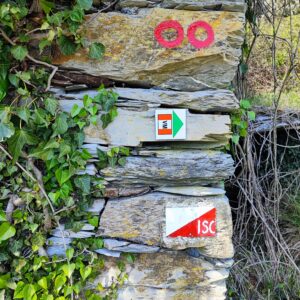
You can start the trails from Colle Caprile where you can park the car and follow the indicated routes. You will continue on an easily challenging climb until you reach the intersection where paths divide.
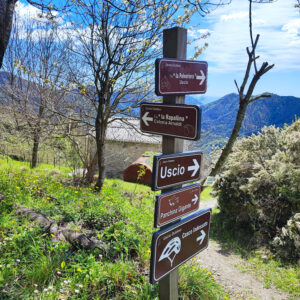
The path of Polveriera
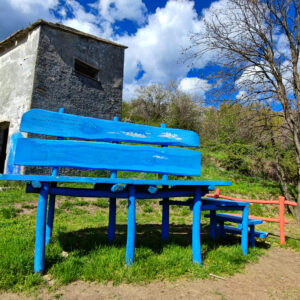
To the right of the crossroad, you can continue on Polveriera as the easiest path to descend to the village. A long the way you’ll arrive at the Giant Bench of Uscio. From there you can admire the wonderful view of the entire valley. Along the Ploveriera path you can also see one of the seven houses of stars, which commemorates the partisan guerrilla.
La Rapallina-Colonia Arnaldi , Casa del Cinese-Castello Vecchio
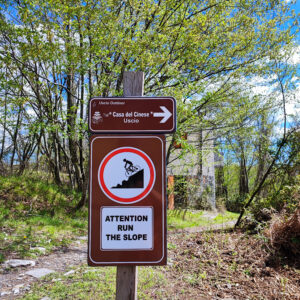
At the crossroad if you turn left you can follow the “La Rapallina -Colonia Arnaldi” path until you reach the intersection of “Casa del Cinese -Castello Vecchio”
“Casa del Cinese” is located on the ancient slate quarry -men’s road leading to the slate quarries of Monterosso and is one of the seven houses og the stars even though the stars are no longher visible.
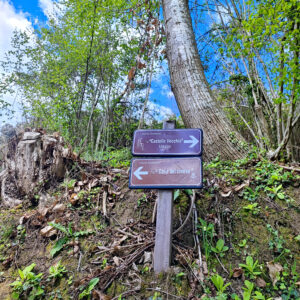
To the right of the crossroads you can follow the path to the Old Castle.
The paths are walkable in about 20 minutes and lead down towards the town of Uscio.
You can also reach to the paths from the town center, starting from behind the church and following the path of Polveriera till reaching the Rapallina-Colonia Arnaldi junction.
For more information visit the website: https://prolocorecco.it/natura/itinerari/vivi-i-sentieri-di-uscio
The trails for hikers.
The paths of Uscio in the Via del Mare suitable for hikers
The Uscio-Recco route takes about 4 hours walk. You start from Uscio, towards Passo della Spinarola, and from there take the Via del Mare path.
Uscio-Camogli takes a 5-hour walk. You start from Uscio towards Passo della Spinarola, and from there take the Via del Mare path.
Uscio-Punta Chiappa takes a 6-our walk
Uscio-Rapallo takes an 8-hour walk starting from Passo della Spinarola and following the directions of the Via del Mare path.
Uscio-Santa Margherita takes an 8-hour walk You start from Passo Spinarola, then Passo del Gallo until Ruta, then take the deviation for Santa Margherita.
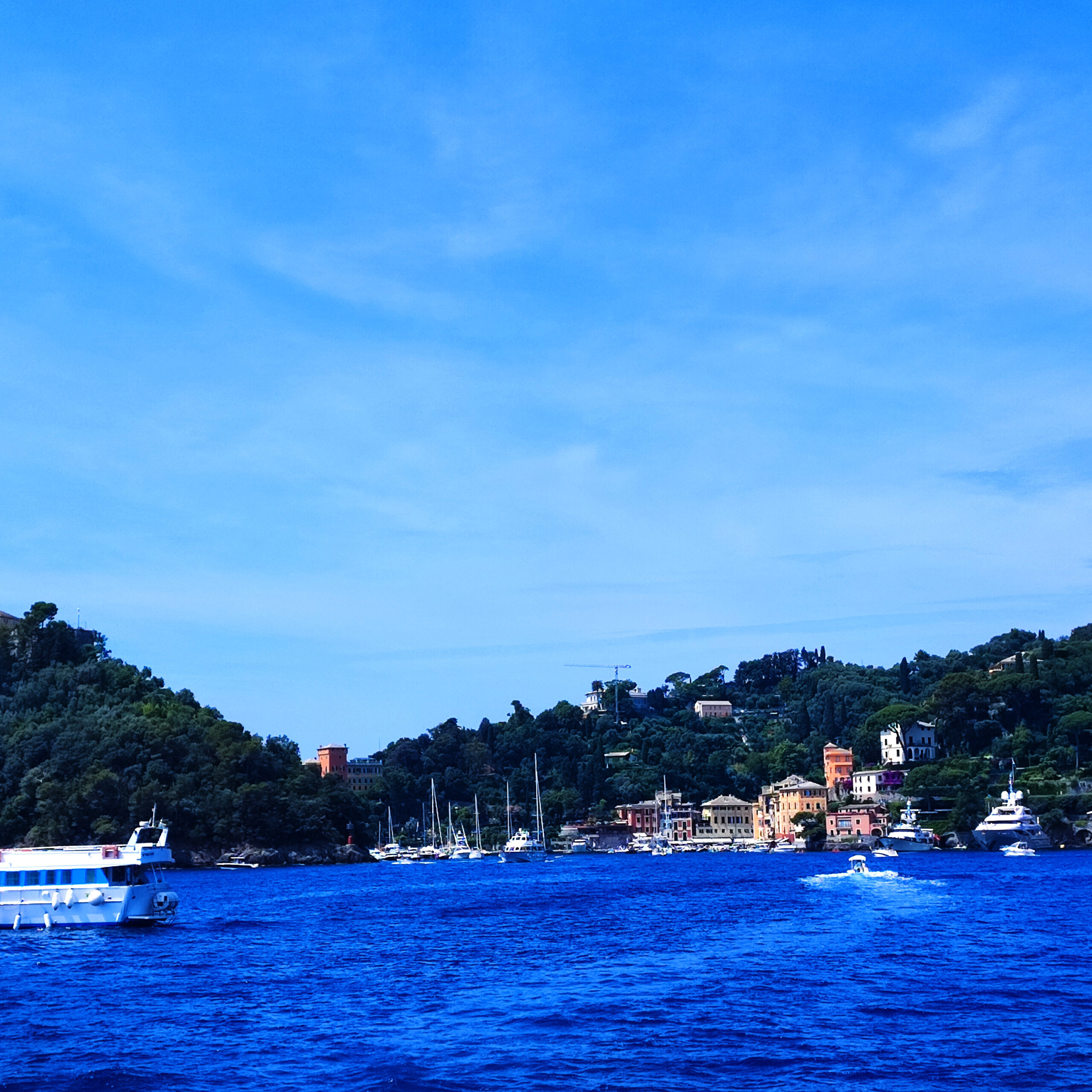
Uscio-Portofino takes a 6-hour walk. You begin from Passo della Spinarola, then passo del Gallo, following the directions of Via del Mare (VM) until you arrive in Portofino.
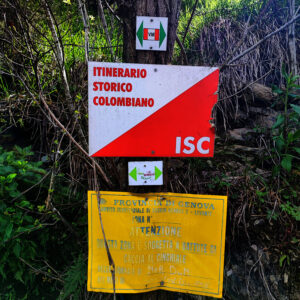
The Colombian Historical Itinerary: You start from Uscio and arrive in Genova Nervi, where the Golfo Paradiso begins.
You can cycle through the Uscio-Gattorna, Uscio-Calcinara and Uscio Milunetti paths in Via del Sale
Where are we:

Anita B&B
"To the curious traveler visiting Liguria, land of sailors and navigators, coral's fisherman, lace-makers, poets and writers, may the scent of our land and the sea breeze, takes you to the most beautiful places in your heart, ones you have always dreamed of"